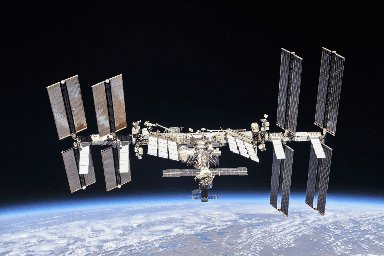
Isaacman attends Soyuz launch of ISS crew
A new crew arrived at the International Space Station on July 14 on a launch witnessed in person by NASA Administrator Jared Isaacman.
A Soyuz-2.1a rocket lifted off from the Baikonur Cosmodrome in Kazakhstan at 10:47 a.m. Eastern, placing the Soyuz MS-29 spacecraft into orbit. The spacecraft docked with the station's Prichal module just over three hours later.
The spacecraft delivered Roscosmos cosmonauts Pyotr Dubrov and Anna Kikina and NASA astronaut Anil Menon to the station, where they will spend the next eight months. It is the second flight to the ISS for Dubrov and Kikina and the first for Menon.
Among those attending the launch in Baikonur was Isaacman. He is the first NASA administrator to attend a launch there since October 2018, when then-Administrator Jim Bridenstine attended the Soyuz MS-10 launch, which suffered an in-flight abort but landed safely downrange of the launch site.
Isaacman said in February he planned to go to Baikonur for the launch, saying he had a "good friend that's going to be going up on that mission, so it would be hard to imagine to miss it." Anil Menon is married to Anna Menon, who flew with Isaacman on the Polaris Dawn private astronaut mission in 2024.
At the time, he said he would also attempt to meet with his Russian counterpart, Roscosmos Director General Dmitry Bakanov. There had been no face-to-face meeting between the agency heads since the October 2018 launch until last July, when Bakanov met with NASA Acting Administrator Sean Duffy before the Crew-11 launch in Florida.
NASA, in its press release about the launch, did not disclose any meetings between Isaacman and Bakanov, and Isaacman did not mention any in his own social media posts from the launch.
However, Bakanov told Russian media that he had met with Isaacman before the launch. Bakanov said Roscosmos had agreed to continue ISS operations through 2030, the scheduled retirement date of the station, after the agency had previously committed only through 2028.
He also said NASA and Roscosmos agreed "in principle" to continue bartering seats between Soyuz and commercial crew vehicles to ensure there will be at least one Russian and one American on the ISS should a vehicle be out of service for an extended period. Those seat barters allowed Anil Menon to fly to the station on Soyuz; Kikina was the first Russian to fly on a Crew Dragon, on the Crew-5 mission in 2022.
Bakanov said Roscosmos and NASA agreed to conduct "more detailed coordination" of their satellite constellations to avoid collisions, but the report did not elaborate on what that entailed.
Russian media also reported that Isaacman met with Denis Manturov, Russia's deputy prime minister. Manturov said those discussions involved potential cooperation between future U.S.-led commercial space stations and the proposed Russian successor to the ISS, particularly for mutual assistance in the event of emergencies.
With Soyuz MS-29 now at the ISS, the station's crew is performing handover activities ahead of the departure of Soyuz MS-28. That spacecraft will return Roscosmos cosmonauts Sergey Kud-Sverchkov and Sergey Mikayev and NASA astronaut Chris Williams. Soyuz MS-28 is set to depart the station July 26 and land in Kazakhstan.
Thank you for reading the article!