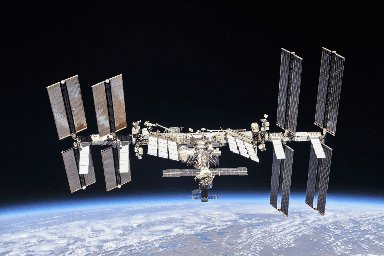
Laying the groundwork for the first human mission to Mars
Sending humans to Mars and returning them safely to Earth would be one of the most complex endeavors that humans have ever carried out. The number of issues that must be dealt with simultaneously is inordinately large, and all must be resolved in order to have a successful mission. NASA has a lot of experience with human missions in low Earth orbit and some to the moon. The Artemis missions will give us more (and current) experience at the moon. And we've sent spacecraft to all the planets in our solar system. But we're not yet ready to send people to Mars.
Developing a Mars mission is not just about designing and building a spacecraft that can get there, land and get back. A successful mission must also be able to carry out science activities at Mars while also understanding, tracking and ensuring human health and performance issues so that astronauts can do what we're asking of them and do it safely. Meanwhile, a successful mission must address planetary protection issues so that, if there is indigenous life on Mars, we don't risk contaminating Mars or, on return, contaminating Earth.
These very different components must be developed together and integrated from the very beginning into a single mission concept and plan, before some designs have already been fixed. Aspects that must be considered include:
We recently convened the "Achieving Mars XII" workshop (sponsored by Explore Mars, Inc.) on this topic to discuss for the first time how to integrate these different components. Participants included representatives from NASA, industry and academia, spanning all of these mission considerations. In order to make the discussion concrete, we created two different mission scenarios that we thought would cover the range of possible mission concepts - one to a site on Mars that might have subsurface ice that could be used as a resource, and one to a site that focused on doing science today.
Findings from the workshop emphasized that human Mars exploration faces several fundamental challenges that must be solved by the four disciplines working together:
The workshop participants made specific recommendations for NASA in integrating these disciplines:
Implementing these recommendations will be required if we are to achieve successful human missions to Mars. They're on the critical path toward developing mission concepts and specific architecture designs, and little can happen to move us forward on implementing human missions to Mars until we take these actions. These recommendations should be implemented now, even if work continues at only a relatively low level, to keep human missions from always being more than a generation in the future.
Bruce Jakosky is an emeritus professor at the University of Colorado Boulder and an affiliate professor at the University of Washington. He has 50 years' experience as a Mars researcher and was the Principal Investigator of the MAVEN spacecraft mission that orbited and explored Mars for more than ten years.
Scott Hubbard is the former Director of NASA's Ames Research Center, was the first NASA Mars Program Director and has been active in space exploration for more than 50 years. Now a semi-retired member of the Stanford Department of Aeronautics and Astronautics faculty, he founded the Stanford Center for Commercial Space Transportation and the peer-reviewed journal New Space.
Jennifer Rochlis is a former NASA division chief and a leading expert in Human Systems Integration, with expertise at the intersection of human performance, technology and complex mission systems; she is now co-founder and CEO of Advancing Frontiers, Inc., and co-founder and board chair of the Organization for Space Medicine Engineering and Design.
Timothy Kokan is a scientist at L3Harris' Space Propulsion and Power Systems Segment with over 20 years of experience in mission analysis and conceptual design of a wide array of spacecraft, planetary landers, and launch vehicles for various applications. He is currently leading L3Harris' Artemis and Human Mars Exploration architecture development efforts.
SpaceNews is committed to publishing our community's diverse perspectives. Whether you're an academic, executive, engineer or even just a concerned citizen of the cosmos, send your arguments and viewpoints to opinion (at) spacenews.com to be considered for publication online or in our next magazine. If you have something to submit, read some of our recent opinion articles and our submission guidelines to get a sense of what we're looking for. The perspectives shared in these opinion articles are solely those of the authors and do not necessarily represent their employers or professional affiliations.
Thank you for reading the article!