STARLINK-38058
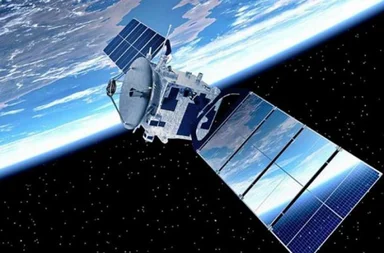
Satellite information STARLINK-38058
| Spacetrack Directory Name | STARLINK-38058 |
| Group | Starlink G17-46 |
| Group follow Starlink G17-46 | Tracker Starlink G17-46 |
| Orbit launches |
 2026-07-02 (4 months ago) |
| Days in orbit | 150 |
| Country/organisation of origin | USA (US) |
| Starting point | AFWTR (Vandenberg Air Force Base, USA) |
| Categories | |
| Perigee | 293 km |
| Apogee | 295 km |
| Orbit slope (inclination) | 97.28° |
| Laps per day | 15 |
| Orbit | LEO |
| Height STARLINK-38058 | 472.98 km |
Additional information STARLINK-38058
STARLINK-38058, 69757 is a payload satellite owned by SpaceX/Seattle (US) in SSO that was launched on Thu, 02 Jul 2026 UTC via an FALCON 9 launch vehicle from the Air Force Western Test Range (AFWTR). Payload-class satellites include a variety of spacecraft equipped with specific instruments for various scientific and technological missions. These include communications satellites like Starlink; space stations such as the ISS; scientific satellites like the Hubble; Earth observation satellites from companies like Planet Labs, Umbra, and HawkEye 360; GPS; miniature CubeSats for education and research; and military/defense satellites.
satellite STARLINK-38058 Date of exalting 02.07.2026y. Average height of ISS STARLINK-38058 hundred 472.98 km. Average velocity STARLINK-38058 is 27471.33 km/h. Inclination STARLINK-38058 satellite 97.28°.TLE
Average velocity STARLINK-38058
Average inclination STARLINK-38058
Mean right ascension of the ascending node (RAAN) STARLINK-38058
Mean argument of perigee STARLINK-38058
Mean semi-major axis of the orbit STARLINK-38058
Mean orbital eccentricity STARLINK-38058
ISS
Buy us a coffee!


